

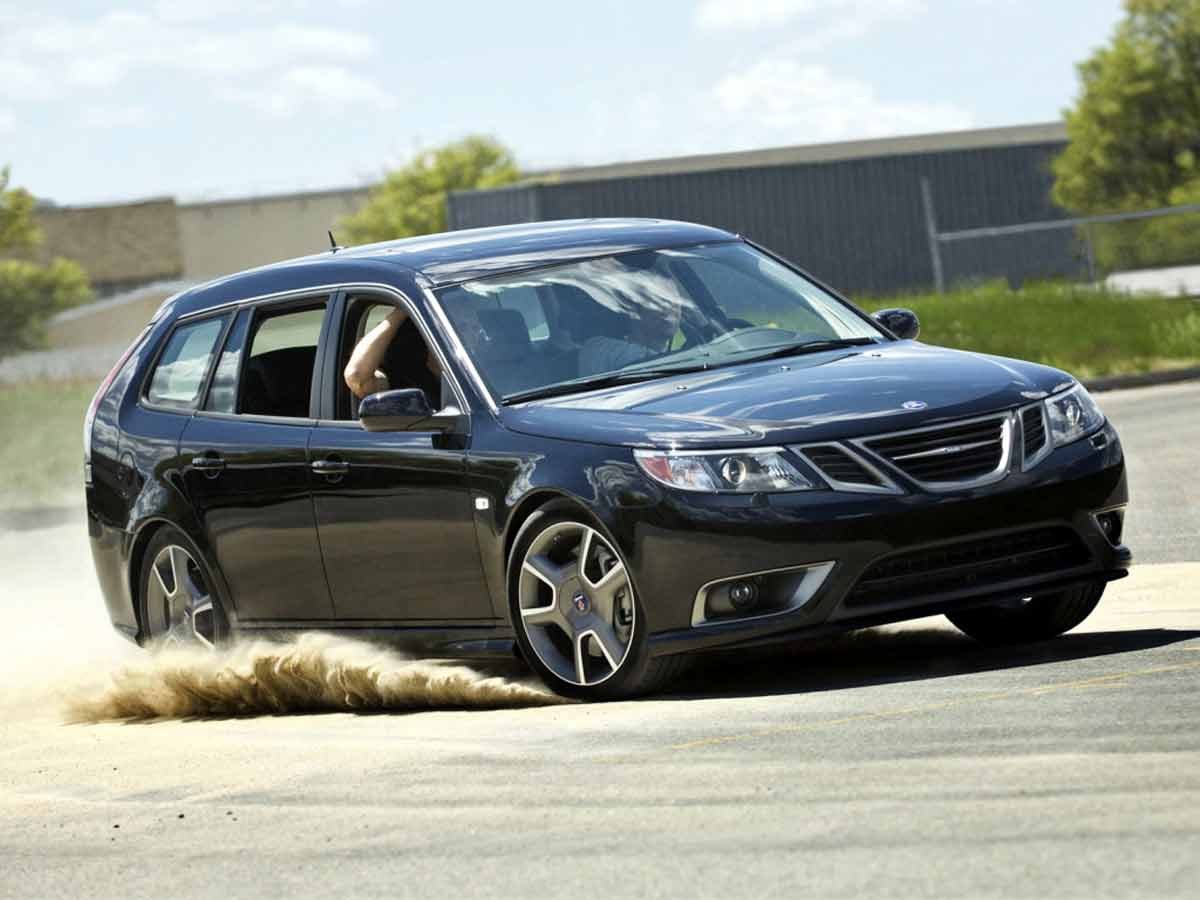
Although somehow at the end of its life Saab introduced a car with four-wheel drive to the market, by all accounts it could have been much earlier – even before Audi and their XWD drive which they branded as “Quattro“.
Most of us know that it was the top model in the Saab 9-3 program that was branded as “Turbo X“. It had a 280hp Holden-sourced V6 turbo engine, with the then latest advanced four-wheel drive with automatic rear-axle differential lock and plenty of body tweaks to make it look like a ‘street racer’.
In addition to the “Turbo X” model, which was produced in a limited series, the much cheaper 9-3 with four-wheel drive was also available to customers. A typical representative of this version was, say, the model Saab 9-3 2.0T XWD. The Saab 9-3 2.0T XWD can be seen as a lightweight version of the top model. It has a slightly smaller engine, slightly less advanced four-wheel drive and slightly less body tuning, and it is interesting that the result is a more successful car at a price lower by almost one third.
But how did Saab get the XWD model?
If we look a little more into the past, we could see that the XWD drive could have been a symbol of Saab, just like the FWD, even before Audi and their Quattro drive. And the key link between Saab and Audi with four-wheel drive is the Johansson family and their huge contribution to the auto industry in general.
Although there were several from the same family, Sigvard Johansson was perhaps the most significant. Sigvard was a Swedish engineer and inventor of the so-called Haldex coupling, which is now found in many car brands around the world.
The Haldex clutch
The Haldex clutch is a component of the drive system with a second axle (front or rear) that can be connected, which makes the machine four-wheel drive. This component ensures smooth connection of the axle when the main drive wheels slip. The amount of torque directly depends on how tightly the clutch is clamped (discs in the structure of the mechanism).
Sigvard Johansson
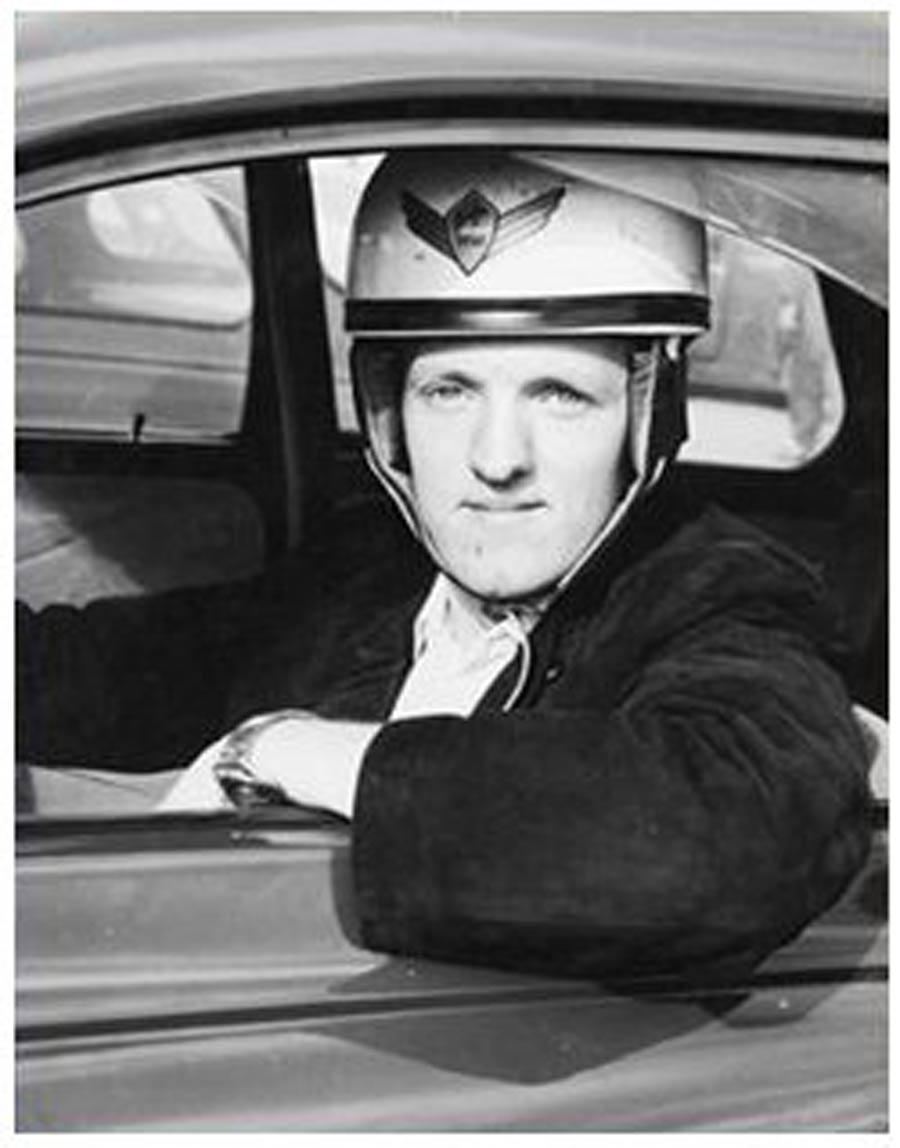
Designer, inventor and racing driver Sigvard Johansson was born in Långasjö in Småland and was attracted to Trollhättan and Saab in 1959. Johansson was loyal to the SAAB company until 1984, when he had already started several of his own companies, such as Grunneboföretaget IPU AB, for engineering and prototype development. Among other things, he invented his own compressor and a new method for belt tension.
Peter Johansson
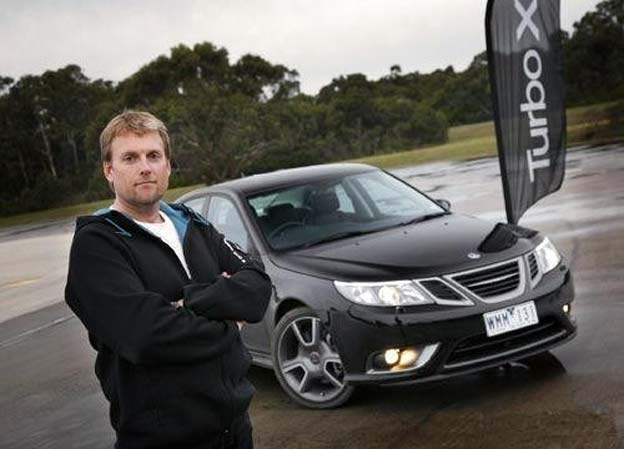
Johansson married Ruth Gun-Britt Johansson on April 21, 1962. and in November of the same year they had a son, Peter. Continuing his father’s mission, it was Peter Johansson who was one of the key people at Saab who integrated Haldex four-wheel drive into Saab’s 9-3, many years later after Peter’s father invented the Haldex coupling.
Haldex XWD – How did it all begin?
Motorsport was Johansson’s great interest and he drove track races in his younger days. He had great success in racing, both in track and ice racing competitions and has won races at the Nürburgring in Germany.
When Johansson was testing his son Peter’s rally car (later Saab 9-3 Turbo X test driver and demonstrator), he got an idea and constructed what would become sensational world news. It was a unique clutch for four-wheel drive, which eventually became known as the Haldex clutch. He received a patent for the invention in 1988, and in 1992 the company Haldex took over the production rights and started serial production of the clutch in Landskrona in 1996.
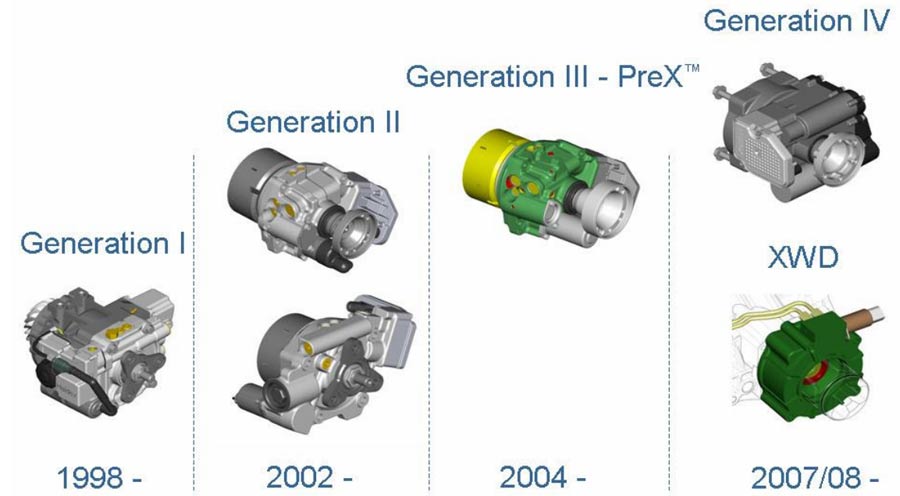
Johansson could be happy that his invention was thus included in all cars of the Volkswagen Group with a transverse engine, and therefore also in the legendary Audi. Today, the clutch is found in over forty brands of cars, then the latest generation of Haldex (generation 4) is found in the Saab 9-3 XWD (Turbo X).
Haldex Traction
The Haldex Coupling (First generation) made its first appearance 1998 in the Audi TT, Audi S3 8L and VW Golf with an electronically controlled hydraulic-mechanical all-wheel drive concept. Haldex Coupling is a slip clutch that transfers torque from an input shaft to an output shaft to make cars four wheel drive.
When the front and rear axles of the car rotate at different speeds, a hydraulic pressure builds up in the clutch. This pressure is used to press together a number of lamellae so that the torque from the input axle is transferred to the output rear axle. A finesse is that the construction works in both directions, which means four-wheel drive even when reversing. In addition, power can be transmitted either from front to back, which happens for example in cars from Saab, Volvo and Volkswagen/Audi, or from back to front as in the Bugatti Veyron.
Later versions of the clutch have an electric pump, which can fully or partially pressurize the clutch. In this way, you can get four-wheel drive to prevent the car from skidding, not just to dampen a skid that has already occurred.
The Haldex clutch was invented by rally driver Sigvard “Sigge” Johansson, but is named after the Swedish company Haldex that developed it. The part of Haldex that manufactures the Haldex coupling was sold in 2011 to BorgWarner.
How could a Saab be a “Quattro”?
If there was a little more luck and listening on the part of Saab management, and a little later GM management, Saab cars would have integrated and offered four-wheel drive in their cars long before all other manufacturers. Just as was the case with Turbo Chargers.
If there was enough understanding on the part of Saab management at the beginning of the 80s of the last century, already then, buyers of Saab cars around the world could drive safer (compared to the prevailing FWD) XWD machines.
If that were the case, Sigvard Johansson would have developed his invention within the Saab company and it would have been integrated into the Saab cars of that time. It would be similar a little later, when Sigvard’s son Peter was in the Saab company working on the same development tasks.
At the Saab company, a lot of work was done on the integration of the drive on all four wheels (AWD)
It was Peter, with his considerable driving skills and deep involvement in the development of four-wheel drives, who expressed regret during a promotional drive in Australia in 2008. In 2008, Peter Johansson stated that he had spent more than twenty years at Saab working on the development of an additional three advanced four-wheel drive systems(!), none of which General Motors deemed fit to bring to market?!
Peter was particularly saddened by this fact of denial by GM, because in addition to him, two more generations from his family worked in the development of the Saab company, right from the very beginning after the Second World War.
Why does Audi have to reap all the laurels?
During those test drives by Australian journalists at GM’s test track, Johansson complained from the passenger seat about SAAB’s position at the time – describing how unfair it was for companies like Audi to get all the credit for AWD. And all because of GM’s refusal to implement AWD for the Saab brand until that moment.
XWD: The Real-World Engineering Legacy
What made Saab’s XWD (Haldex Gen4) stand out?
Unlike typical reactive AWD setups, Saab’s Cross-Wheel Drive was a proactive torque-distribution system. It could route power to the rear wheels even before slippage occurred — sending as little as 4% of torque during steady cruising, or up to 85% to a single rear wheel under aggressive cornering. The secret lay in the Haldex Gen4 coupling paired with Saab’s unique electronic limited-slip differential (eLSD), controlled in real time by the car’s ESP and traction systems. The result was a car that didn’t just respond to the road — it anticipated it.
The people behind the system were Saab engineers such as Mats Fägerhag, who led the 9-5 NG and chassis programs under GM’s Epsilon II platform, and Peter Johansson, later founder of Chassis Autonomy, who oversaw integration of Haldex AWD into the 9-3 range. Their approach wasn’t about brute grip — it was about predictive handling, true to Saab’s aviation logic: anticipate, don’t react.
Why Gen4 mattered:
Earlier Haldex systems (Gen1–3) waited for wheel slip before engaging the clutch. The Gen4 upgrade brought a pressure accumulator, faster hydraulics, and smarter ECU control integrating engine and brake inputs — enabling torque pre-load and full ESP cooperation.
In the Turbo X, the eLSD added yet another layer, vectoring torque across the rear axle. That’s why a well-driven Turbo X feels more neutral and composed than many performance sedans twice its price — a thinking AWD, not a panicking one.
XWD Timeline
- Sept 2007: Saab unveils the 9-3 Turbo X at the Frankfurt Motor Show – the first production car with XWD and eLSD.
- 2008: XWD becomes available across the 9-3 lineup (sedan and SportCombi).
- 2009: The 9-3 X crossover debuts with XWD.
- 2010–2011: The 9-5 NG arrives with XWD standard on Aero models; Trollhättan develops most of the chassis logic internally.
- 2011: The 9-4X luxury crossover uses XWD tuned for SUV dynamics.
- Post-2011: GM reuses the architecture for the Opel Insignia 4×4, minus Saab’s eLSD calibration.
How XWD Compared to Its Rivals
- Audi quattro (transverse models): Uses Haldex as well, but without Saab’s eLSD and custom ESP mapping.
- Volvo AWD (P3 generation): Similar Haldex core, tuned more for stability than driver involvement.
- BMW xDrive: Multi-plate clutch system with mechanical bias; less capable of single-wheel torque vectoring.
- Subaru Symmetrical AWD: Full-time mechanical differential – effective but not predictive; Saab’s XWD relied on brains, not gears.
Living with XWD
Maintaining an XWD car today requires passion and precision.The Haldex pump, ECU, and rear eLSD clutch all need periodic oil changes and software adaptation. Replacement control modules must be programmed via Tech2/SPS, and genuine parts are scarce. Still, Saab owners across Europe and North America keep these systems alive — rebuilding pumps, sourcing controllers from Volvos or Cadillacs, and proving that true engineering never dies, it just gets rebuilt.

The Future That Almost Was: Saab’s Electric AWD Vision
Just as XWD was reaching maturity, Saab was already testing its next step – Electric AWD (e-AAM).
In 2010, Saab and American Axle & Manufacturing formed a Trollhättan-based joint venture called e-AAM Driveline Systems, aiming to create modular hybrid and electric drivetrains. The concept replaced hydraulic clutches with independent rear electric drive units, allowing torque vectoring without mechanical losses. The system’s debut came in 2011 on a test mule – a Saab 9-3 e-AAM prototype – which demonstrated seamless torque distribution on ice in back-to-back tests.
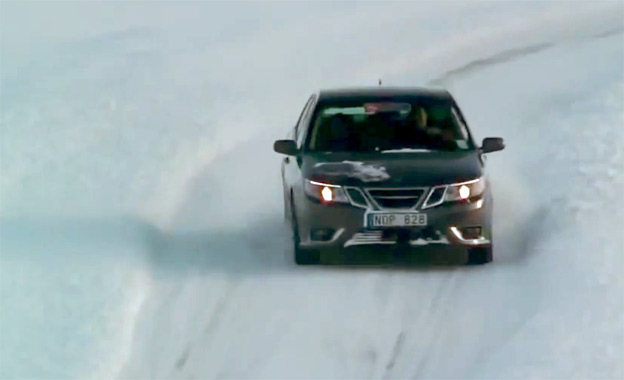
The vision was to offer a plug-and-play electric AWD module that could fit into existing platforms with minimal redesign – the spiritual successor to XWD’s philosophy of adaptability and control. Saab planned to use it in next-generation models after 2012, but the company’s collapse that winter ended the project before production began.
e-AAM e-AWD/Hybrid system with Torque Vectoring. Saab Prototype vehicle on rollers. Electric motor on rear axel powers the vehicle in the event of no grip at front axle:
Ironically, a decade later, the same e-AAM technology became standard in modern EVs and hybrids, from Volvos to Jaguars – a reminder that Saab was again years ahead of its time.
If XWD embodied mechanical intuition, e-AAM represented electronic foresight – proof that Saab’s engineers never stopped thinking about what comes next.
Symbolism That Outlived the Brand
When Haldex announced that the Saab 9-3 Turbo X would be the first car in the world to use its fourth-generation AWD, it should have been the moment Saab claimed its own symbol – as Audi had done decades earlier with Quattro. But fate had other plans.
Today, XWD remains Saab’s silent signature – invisible to marketing, yet unforgettable to those who’ve driven it. Among Turbo X, Aero XWD, and 9-5 NG owners, it’s a badge of honor, a whisper of what Saab once was — and what it could have become.





A very interesting read, what could have been another Saab first!
That’s a great article.
And why…… Should just have made good quality cars, money wasted on things when a decent quality car would have kept them going
Look at how many cars in SAABs class now have AWD. They needed it to remain competitive. As for making good cars, GM insisted on using the Opel Vectra platform to save costs, but it also meant the Saab engineers had to work within the constraints of that older generation chassis.
Great article! Thank you for sharing! And yet another sad example of how corporate business models sometimes kill brilliant idea’s from passionate professionals. The brilliant idea lives on and find’s it’s way but a valuable opportunity that could have served the bigger picture, for Saab in this case, was sadly lost.
I love Saab, but no. This article is very frustrating to read. For one, four wheel drive, as they keep referring to it as…is not the same as AWD. The Haldex clutch used in these vehicles, or at least with the VAG cars, are on AWD, not four wheel drive. And for Audi and Quattro, there is more to it than using the Haldex clutch system primarily found in the smaller vehicles. Most Quattro uses the Torsen differential. The Torsen differential is very different from the Haldex used on Saab XWD. The Audi Quattro Torsen system was introduced in 1980 on the Quattro model. In the end…two very different AWD systems. Stop calling it four wheel drive when it isn’t. This article needs a re-write.
The essence of the article is not which system is better, Audi used both external sources – the essence is how much expert knowledge Saab’s internal engineers had and additionally, what would have happened if the management of Saab and later GM had recognized the values (40 years ago ) – the question is how this technology would be developed further in Saab itself.
A possible guess would be that maybe Saab would develop in-house a much better AWD-XWD-4WD (whatever) than these available
Still think it is a great looking car
I have both manual and auto Turbo X
Great in all weather conditions.
I loved my 9-3 Aero 2.0 6-spd. XWD. I’d still be driving it if parts were available.
Well original Torsen quattro (not the Haldex stuff) was in series production 86 so before Haldex got the patent, so in short, no. And Haldex is not a superior layout anyways, with its use in front transverse cars as a hang on coupling to the rear..
I had 2 beautiful Saab convertible’s. And I’d still have one instead of my new S5 convertible, if only they did the vert’s in XWD. 🤷🏻♂️
I was in the SAAB factory back in 2004 and they unveiled what would be the new SUV. It never came to light. Well it kind of came delight is what the Cadillacs look like now.
Es que un audi lo puede tener cualquiera, un saab no.
Un saab no es para todo el mundo.
Nadie cambiaría un Porsche por un Audi, pero muchos si que cambiarían un Porsche por un Saab.. por difícil que parezca creerlo.
Por cosas así Saab jamás necesitará que uno de sus coches tenga la insignia de xwd, Quattro, Gti, Rs……
No.
Para que quieras un Saab solo necesitas una palabra en la parte de atrás:
SAAB.
Aquí estoy sentada en mi 9.3X gasolina con XWD, disfrutando de su autenticidad
The Saab management story really should be taught in business colleges. It’s classic and still a timeless case of failures.
I got the slow XWD and in the snow and ice on all season tires. You could feel power being sent to all the wheels and in a sticky area you can feel the car sending power to different wheels trying to find grip and it wouldn’t cut power it just kept trying to
It always comes back to crap decisions by GM
But the man working for Saab quit.
To Petro Gaw >
Well, even if Audi (VAG) developed Torsen and Audi is often labeled as a Torsen-based Quattro, out of all the AWD Audis (a.k.a “Quattro”) ever produced, by far not all of them have had Torsen.
– Original Audi Quattro, B2 generation, did _not_ have Torsen but a mid-differential with a vacuum based switchable locking.
– Only the platform used by A4 and models above ever had Torsen. A3 platform has always had Haldex (or whatever it’s branded these days).
The point is that “Quattro” is Audi’s brand for AWD and it does _not_ specify the technology at all.
Well, even if Audi (VAG) developed Torsen and Audi is often labeled as a Torsen-based Quattro, out of all the AWD Audis (a.k.a “Quattro”) ever produced, by far not all of them have had Torsen.
– Original Audi Quattro, B2 generation, did _not_ have Torsen but a mid-differential with a vacuum based switchable locking.
– Only the platform used by A4 and models above ever had Torsen. A3 platform has always had Haldex (or whatever it’s branded these days).
The point is that “Quattro” is Audi’s brand for AWD and it does _not_ specify the technology at all.
My Haldex on my 9-3x “failed” according to the dealer who wanted £3500 to replace it at 42,900 miles. Not wanting to pay that I took the cover plate off myself, cleaned out the gunge, cleaned the pump motor, replaced oil and filter and it’s worked fine ever since. Now on 109,000 miles and I change the Haldex oil every 20,000 miles although it’s never been as dirty as the first time so never needs a massive clean. So regular maintenance is the key and it’s an excellent system when working the most grip I’ve ever experienced in a car before.
I love Saabs and the xwd is awesome… But the Quattro was far superior over the xwd/haldex. Try them both in snow and you will understand.
Smaller Audi’s like the A3 use Haldex as well, not all Quattro is the same. But the original Torsen system in higher end Audis and the original Quattros is way better than Haldex
Thats why i said xwd/haldex to distinguish from torsen
Audi have had a juristic problem with Subaru about the Quattro. I think Subaru was first.
Us models like the 08 TurboX also have issues with maintaining the system, expensive fluid, filters, pumps fail leaving you with a FWD car
It was great as long as it was looked after properly. I had major problems with my Carlsson which was a UK special edition based on the Aero XWD and the haldex diff was very temperamental
Bobby Tetstall from the sound what I heard driving doesn’t look will be there anything to repair unfortunately.
I have second hand one ready to put in.
2010 car so I can’t complain,got it cheap and hopefully soon will be roadworthy again.
I have driven Saabs since 1989 and still have a turbo x however the Audi ( uber ) Quattro in the early 80 ‘s was the first turbo 4 wheel drive , 5 cylinder for me …..adjustable differential…. Rally champions …..
Hey, I took the first shots in this montage.
het X drive systeem kwam van zweedse makelij die saab niet wou gebruiken waarbij oude een patent er op genomen heeft en het geïntroduceerd heeft bij de fameuze audi quattro
Kul fyrhjulsdrift men gjort av glas
It was great as long as it was looked after properly. I had major problems with my Carlsson which was a UK special edition based on the Aero XWD and the haldex diff was very temperamental