

When A High-Mileage Saab Walks Into “Klokje Rond” With Its Chin Up
There is something quietly electrifying about a Saab that has lived a long life yet still carries itself with composure. The Dutch public knows the Klokje Rond series (Autoweek) for its brutally honest verdicts on cars well past their statistical expiration date. Most vehicles arrive with a sagging stance, a fatigued cabin, and an owner hoping good maintenance will outweigh years of wear. But every now and then, a car steps into the spotlight with the kind of confidence earned only through relentless use and consistent care.
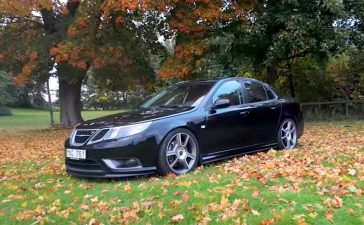
That was the case with the 2003 Saab 9-3 2.0T Aero owned by Rienk Hallink, a car that has already carved its own identity into the tarmac with 420,402 kilometers. When Joep, the show’s mechanic and evaluator, approached it two days after receiving the assignment, he expected the familiar formula: turbo, LPG, high mileage, and a few corners cut along the way. Instead, he found a machine that felt alive long before the key turned in the ignition, and a story that unfolded like a Saab narrative should – unexpected, technical, and strangely emotional.
First Impressions Don’t Lie – But They Don’t Tell the Whole Story
The first few frames of the video capture Joep’s surprise. At a distance, nothing about this 9-3’s exterior reveals its odometer figure. The paint reflects light evenly, the body panels sit properly aligned, and the interior shows none of the fatigue that normally accompanies more than four hundred thousand kilometers of daily duty. Aero seats, dashboard plastics, switchgear – everything wears the patina of careful ownership rather than hard survival.

This is the sort of visual consistency Saab owners know well. When a car survives Nordic winters, salty roads, and decades of real use while keeping its dignity intact, it speaks volumes about both its engineering and its caretaker.
But Joep’s first test drive brought him down from that optimism quickly. City-speed vibrations, a hesitant engine, and an overall sense of mechanical stiffness contrasted sharply with the immaculate appearance. He logged about 25 kilometers behind the wheel and stepped out puzzled – this Saab looked ready for another 200,000 kilometers, yet it didn’t immediately feel that way.
For Saab owners, this moment feels familiar. Turbo engines, when paired with LPG systems, sometimes lose their composure when tuning, maintenance, or mixture settings fall out of harmony. And that’s where this story takes its first significant turn.
A Second Chance On Petrol Transforms the Entire Drive
When Rienk casually mentioned that the car behaves like a different machine on petrol, Joep decided to repeat the drive—this time letting the car run on gasoline instead of LPG. The difference was immediate and unmistakable. On petrol, the B207R engine found its rhythm again: smoother idle, more decisive throttle response, cleaner power delivery. The hesitation vanished. The vibrations subsided. The character returned.
Joep stepped out of the car with a grin that had not been present during the first run. He described it perfectly: a day unfolding like a roller coaster. Initial enthusiasm, followed by disappointment, followed by a renewed respect rooted not just in aesthetics but in mechanical truth.
This is classic Saab storytelling – the machine surprises you, even when you believe you’ve seen it all.
Underneath the Shell: Honest Wear, Smart Repairs, and Saab-Grade Solutions
With the car lifted, the truth revealed itself: not perfection, but evidence of meticulous, thoughtful maintenance.
The well-known GM-derived subframe structure showed the early stages of corrosion years ago, but Rienk didn’t accept that as inevitable. He spent hours with a steel brush, cleaning everything down to sound metal before applying anti-corrosion treatment. It shows. The underside now reflects the kind of restorative care that prevents structural problems rather than postponing them.
Other details confirm the same mindset. The heat shields – among the first components to rattle loose on many 9-3s of this era—were reinforced with additional brackets, then coated to prevent future corrosion. It’s a small job, but it demonstrates something important: he solves problems permanently, not temporarily.
The oil pan had been removed, resealed, and cleaned. The crankcase ventilation setup looked fresh. The subframe bushings showed none of the sloppiness you find on neglected cars.
In Joep’s words, “This Saab is loved.”
A V6 Aero Exhaust… On a Four-Cylinder? And It Works.
A curious and unexpectedly charming modification hides beneath the rear bumper. The beefier, more aggressive V6 Aero exhaust, originally developed for the 2.8T models, has been transplanted onto this four-cylinder Aero.
The fitment was done correctly – cut, aligned, welded, and reinforced. The craftsmanship impressed Joep. But as with any welded exhaust, time eventually reveals small imperfections. A few pinholes have appeared, and for the next Dutch APK (the national traffic inspection), they’ll need attending to.
Still, the sight of a 9-3 Aero sedan carrying that broader V6-style exit is a lovely nod to Saab’s performance heritage. It adds attitude without pretending to be something it’s not, and it blends beautifully with the car’s subtle lowering and clean wheel fitment.
The Mystery of the Vibrations: An Unusual But Logical Culprit
Even with new A-brand tires, new discs, and new pads, the car still vibrated under braking – and occasionally at speed. That perplexed Joep. These aren’t issues that should linger after major brake service.
Then he spotted the telltale sign: the mounting surfaces where the wheels meet the brake discs weren’t spotless, and slight rust buildup had developed between the hub and the disc. Even a fraction of a millimeter of unevenness is enough to create a shimmy at higher speeds.
The second issue was even more revealing: play between the wheel’s center bore and the hub. This is something only experienced mechanics routinely check. With the wheel bolts removed, Joep shook the wheel and discovered movement – proof that the wheel wasn’t properly centered on the hub, even if the bolts were torqued correctly.
No wheel bolt will solve that. Only proper hub engagement will. This explains the stubborn vibrations and validates why the owner, despite doing everything right, couldn’t completely eliminate them.
What A High-Mileage Aero Says About Saab Engineering
It’s easy to romanticize a car with a story like this, but the facts are equally compelling:
- 420,402 kilometers on the original engine
- An automatic transmission still performing well
- Tuning from 210 hp to 259 hp earlier in its life
- Daily drivability that still impresses a professional mechanic
This generation of 9-3 – built in the early 2000s during the transitional GM-Saab years – often gets overshadowed by the OG 9-3 and the classic 900. Yet examples like this prove why the 9-3 Aero continues to enjoy a passionate following.
The chassis offers composure. The B207R engine, when maintained, ages gracefully. The interior materials resist the collapse seen in many cars from this era. And above all, Saab longevity isn’t an accident. It’s engineered.
Rienk’s car doesn’t just survive its mileage – it carries it with pride.
A Saab That Will Keep Going Until Something Major Fails – and Even Then, It Stays
When asked how long he plans to drive the car, Rienk didn’t hesitate. “As long as it lasts. And when something big goes, another engine will go in.”
That, more than anything, captures the Saab mindset. These cars aren’t owned the way mainstream vehicles are. They are kept, maintained, repaired, and revived. They accumulate kilometers the way people collect stories.
This Aero has lived its life with purpose, and there is no hint of retirement in its future. It will simply continue.
Watch The Klokje Rond Moment That Changes Everything
Before the story moves deeper into the technical discoveries beneath this 9-3 Aero, it’s worth pausing for the scene that reshaped Joep’s entire impression of the car. The moment he switches from LPG to petrol – and the Saab suddenly regains its voice – is captured perfectly in Autoweek’s feature. Below is the video for those who want to see the transformation unfold exactly as it happened: