


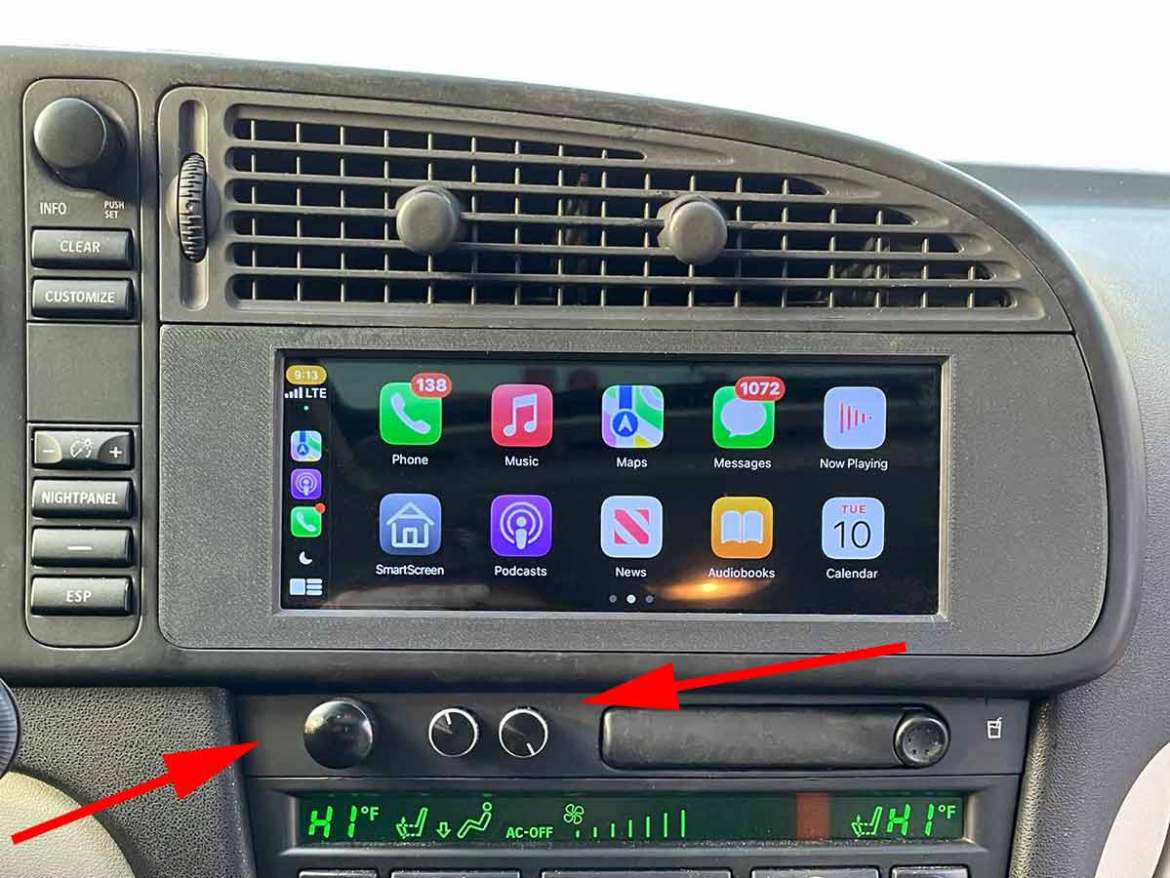
The owners’ request for physical volume and tone controls when they were added was highlighted in SaabPlanet’s February 2026 coverage of the ICM4 retrofit to Ahmad Abu Maizer’s car. They wanted modern phone connectivity with the familiar feel of turning a knob.
For the early Saab 9-3 driver, those little touches are part of the cockpit charm. “The touchscreen opens up new possibilities, but the controls around it keep the car feeling like something its owner knows.
That’s a good place to get started on a dashboard upgrade in any car. It’s also a way to check out the larger aftermarket displays available for trucks like the Chevrolet Silverado. The question is whether the new interface fits the car, its existing equipment and the habits of the person behind the wheel.
Saab’s Retrofit Projects Make the Connections Visible
The early 9-3 offers a particularly clear example of why the original electronics deserve attention. Saab’s workshop documentation for the 2006 model describes an optical network AUDIO between components, with the Infotainment Control Module acting as a gateway between that network and the vehicle’s electrical buses.
So the visible control panel is just one part of a connected system. You need to understand what is behind the dashboard to understand an upgrade.
Adding physical controls to Ahmad’s ICM4 project addresses another aspect of the same problem: how a driver uses the finished installation. Old habits die hard for new functions. But if you like a volume knob, you might want to keep that interaction even as you change how the music gets to the speakers.
The difference is that it leaves enthusiasts with two things to judge: does the installation play nice with the vehicle’s electronics, and does it feel nice to use? Both are worth a look before the dashboard falls apart.
The Silverado Brings the Same Question Into a Different Cabin
A Silverado has a different dash and a different set of compatibility requirements. The transferable idea is to start by having the whole system already fitted to the vehicle.
For example, Merge Screens’ Chevrolet Silverado Tesla-style screen is listed for 2007-2026 trucks, with configs matched to year, trim and factory equipment. The listing indicates wired Apple CarPlay and Android Auto, with wireless ability as an optional upgrade.
Another factor is the product’s factory-radio requirement: The original unit has to be there and working. If the customer already has a radio problem, they should have that fault assessed before concluding that a display upgrade is the answer.
A good initial inquiry for a Silverado owner about this route is to include some dashboard pictures and description of the existing audio and camera kit. That description also covers earlier changes. We need to understand the truck as it is now.”
Preserving a Function Includes Preserving Access to It
It is easier to judge compatibility if it is shown in everyday tasks. You can adjust the temperature while viewing a map, change the volume during a phone call, or select a camera view. Each has a practical sequence the owner may ask to see.
Merge Screens’ Silverado page lists retention of functions like steering-wheel controls, factory cameras and Bose audio. Those are good starting points for a demonstration tailored to a particular configuration. Ask about the features of that particular truck, how they will be accessed and what changes their operation would have after installation.
The example of Saab remains relevant here. Familiar controls are good because owners already get them. Two questions are worth settling: whether to keep a function available anywhere in the system, and whether to keep it convenient to reach.
Before ordering make a short list of controls used on almost every journey. Have the installer or supplier explain each one using the proposed installation. The ensuing conversation is more informative than a quick demo of the home screen.
A Larger Display Needs to Earn Its Space
When you consider navigation, or browsing an audio library while parked, the appeal of a big screen is easy to understand. It also becomes a significant element of the interior, so the relationship with the surrounding dashboard is important.
Begin with photos of the correct installation for the vehicle. Observe the position of the vents, the finish of the bezel, and the clearance around nearby switches. Observe it from the regular driver position and as it appears face on. A photo taken from the passenger seat can give the screen a very different look from what the driver will see.
Request to see day and evening operation. See how bright they are and what information is displayed on the home screen. Before they decide a certain size is the right size, owners should be able to tell if they like the presentation.
For someone who has had a car for years, these are the decisions that go along with living with that purchase. The novelty of a new display is soon over, its position, its finish and its daily behavior remain.
Keep the Next Repair in Mind
Documentation is a good thing for Saab enthusiasts to care about: modification may still be in the car when another workshop, or another owner, needs to understand it. That record is worth saving for a Silverado upgrade.
Ask what original components are still installed, what other interfaces are used, and what would be needed to go back to the previous setup. See if any trim or wiring changes are permanent. Keep the vehicle’s service records together with the installation instructions, configuration details and photographs.
Before committing, a Silverado owner can request confirmation of the proposed configuration and details of the support available afterward from Merge Screens. The quote should also include optional connectivity equipment, additional parts and installation cost.
At handover, bring the phone that will normally be used. With the vehicle parked, work through pairing, audio, climate controls and the fitted camera views. Ask how to return to familiar vehicle menus, and how future software updates are handled These are good things to learn while the installer is still around to explain them.
Modern Features, With the Vehicle’s Character Intact
The Saab retrofit community is a great example of what makes an update satisfying. The appeal is putting something useful in there while respecting the controls, layout and relationships already built into the car.
A Silverado owner can hold the same standard for a screen purchase. Test the electronics, check the fit and finish and spend some time understanding how the everyday functions will work. Then a bigger screen is considered part of the cabin.
The goal is clear: the vehicle is still recognizable and the tasks that made the upgrade necessary are easier to cope with. The badge on the bonnet could adorn a Swedish saloon or an American pickup. Either way it’s a good result.


